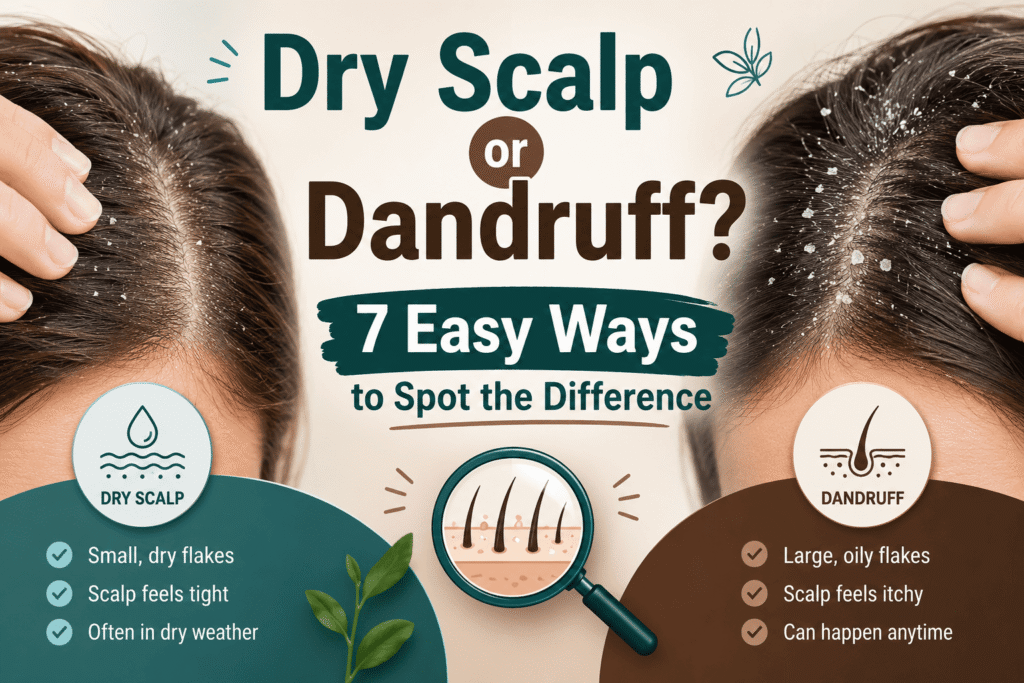
When you notice white flakes on your clothes or itchiness behind your ears, it can be difficult to know whether you have dry scalp or dandruff. Understanding the difference between dry scalp vs dandruff is the first step toward choosing the right scalp care routine. Many people confuse dry scalp or dandruff because both conditions cause flakes and itching, but their causes and treatments are different. If you’re wondering How to Tell the Difference Between Dandruff and Dry Scalp, this guide explains the key signs, symptoms, causes, and simple care tips.
In this article, you will gain a greater understanding of the symptoms and causes of dry scalp or dandruff, along with practical tips to help you identify the condition and maintain a healthy scalp.
What is Dry Scalp?
A dry scalp occurs when the oil content in the skin on your scalp is lower than normal. The same way you can get cracks and flaking on the skin of your hands or face, the same thing can happen to your scalp because there is a loss of moisture from the skin.
The most common causes of dry scalp are environmental factors, using hair products that produce harsh effects on the scalp, using too much shampoo, or dehydrated skin.
Symptoms of Dry Scalp
The most common symptoms of dry scalp are:
- Small white flakes of dry skin
- Feeling like something is “tight” or “uncomfortable” on the scalp
- Mild itching
- The area around your hairline feels dry and rough compared to other areas of the scalp
- Dry skin on areas other than your scalp
The flakes associated with having dry scalp typically are very small and relatively colorless.
What Is Dandruff?
Dandruff is a common problem on the scalp. It is characterized by flaking of the scalp and itching. Dandruff can cause itching as well as the appearance of scalp flakes. Dandruff is commonly caused by excess scalp oil, scalp irritation, or an overabundance of a naturally occurring yeast present on our scalps.
Dandruff occurs in all age groups. Dandruff often develops sporadically over time and may last for a short period of time.
Symptoms of Dandruff
Dandruff frequently presents with white or yellow flakes that fall onto the shoulders and other clothing, a greasy or oily-looking scalp, continual itching, and large, thick, yellowish or greasy flakes that appear shortly after washing your hair. There may also be irritation or redness in areas where flakes are present.
Dandruff flakes are generally larger than normal flakes, with some appearing to have a greasy or oily surface texture.
What Causes a Dry Scalp?
Factors that contribute to the causes of a dry scalp include the following:
1. Cold and/or Dry Weather
During winter or in dry climates, the moisture found in your scalp will be depleted.
2. Too Many Shampoo Washes
Overwashing your hair strips moisture from the scalp and leaves it susceptible to dryness.
3. Harsh Hair Products
Certain shampoos may wash away the natural oils that help keep your scalp hydrated and may also irritate your scalp.
4. Dehydration
Drinking too little water can reduce your skin’s moisture, including your scalp.
5. Very Hot Water
Using very hot water to wash your hair can remove natural oils from your scalp and leave it dry.
What Causes Dandruff?
Dandruff has many potential causes.
1. Excessive Oil Production
Too much oil on your scalp creates an environment where yeast can thrive, contributing to dandruff.
2. Product Accumulation on Your Hair and Scalp
If you aren’t cleaning your hair thoroughly, hair products can build up, irritate your scalp, and lead to flaking.
3. Sensitivity of the Scalp
Some people are more likely to develop dandruff when using certain hair care products, such as gels and sprays.
4. Lack of Scalp Hygiene
Not washing your scalp regularly allows dead skin cells and excess oil to build up, increasing the likelihood of dandruff.
5. Overgrowth of Yeast
Malassezia is a naturally occurring yeast on the scalp, but an overgrowth may contribute to dandruff in some individuals.
How Can I Tell Whether I Have Dry Scalp or Dandruff?
If you’re unsure about dry scalp vs dandruff, there are a few simple ways to identify the difference.
Check the Flakes
If the flakes are small and dry, you likely have dry scalp. If the flakes are larger and greasy-looking, you are more likely to have dandruff.
Inspect Your Scalp
If your scalp feels tight and rough, it may indicate dry scalp. If it feels oily, irritated, and itchy, dandruff is more likely.
Look at the Time of Year
If symptoms become worse during winter or in dry climates, dry scalp could be the cause.
Observe Other Parts of Your Body
If your hands, body, and face are also dry, it is likely part of an overall dryness issue rather than dandruff.
Tips For Caring For A Dry Scalp At Home
If you think you have a dry scalp, these simple habits may help.
1. Use a Mild Shampoo
Choose a gentle shampoo that doesn’t leave your scalp feeling stripped or tight.
2. Avoid Hot Water
Whenever possible, wash your hair with lukewarm water.
3. Massage Your Scalp Gently
A gentle scalp massage may help improve comfort and distribute natural oils.
4. Stay Hydrated
Drinking enough water supports healthy skin and scalp.
5. Use Natural Oils Wisely
Some people use coconut oil or onion oil as part of their hair care routine to help maintain scalp moisture and support healthy hair.
Tips For Caring For Dandruff At Home
If your concern is dandruff, consider these daily practices.
1. Wash Your Hair Frequently
Keeping your scalp clean helps remove excess oil and buildup.
2. Avoid Excessive Product Build-Up
Limit styling products and cleanse your scalp thoroughly after use.
3. Follow a Proper Hair Care Routine
A consistent routine helps create a healthier scalp environment.
4. Manage Stress
Stress may contribute to scalp problems in some people.
When Could a Dermatologist Be an Ideal Option?
While mild flaking often improves with proper scalp care, you should consider consulting a dermatologist if:
- Your itching is severe.
- Your scalp is swollen or tender.
- You notice significant redness.
- Home remedies have not improved your symptoms.
- Flaking continues for several weeks.
A dermatologist can identify the underlying cause and recommend the most appropriate treatment.
Final Thoughts
Knowing How to Tell the Difference Between Dandruff and Dry Scalp can help you choose the right hair care routine. Although dry scalp or dandruff may look similar at first, paying attention to your flakes, scalp condition, and symptoms can make it easier to identify the problem. Once you understand the difference between dry scalp vs dandruff, you can follow the right care habits to support a healthier, more comfortable scalp.
If you’ve confirmed that your flakes are caused by dandruff, read our how to get rid of dandruff fast at home naturally guide for simple home remedies and scalp care tips.